


01
Bring Surface Treatment In-House to Reduce Lead Time and Cost
Reducing outsourced plating cuts transport and waiting time. In-house control shortens lead times and reduces costs while minimizing delivery variation.


A Complete, All-in-One Solution from Surface Treatment to Finishing
Laser Cladding & Grinding Machine
SOLUTION
50% Reduction in Setup Time*
90% Reduction in Processing Cost*
Hexavalent Chromium-Free
* Compared with conventional outsourced plating. Results vary by workpiece and processing conditions.
Benefits
Scroll horizontally to view the full content.
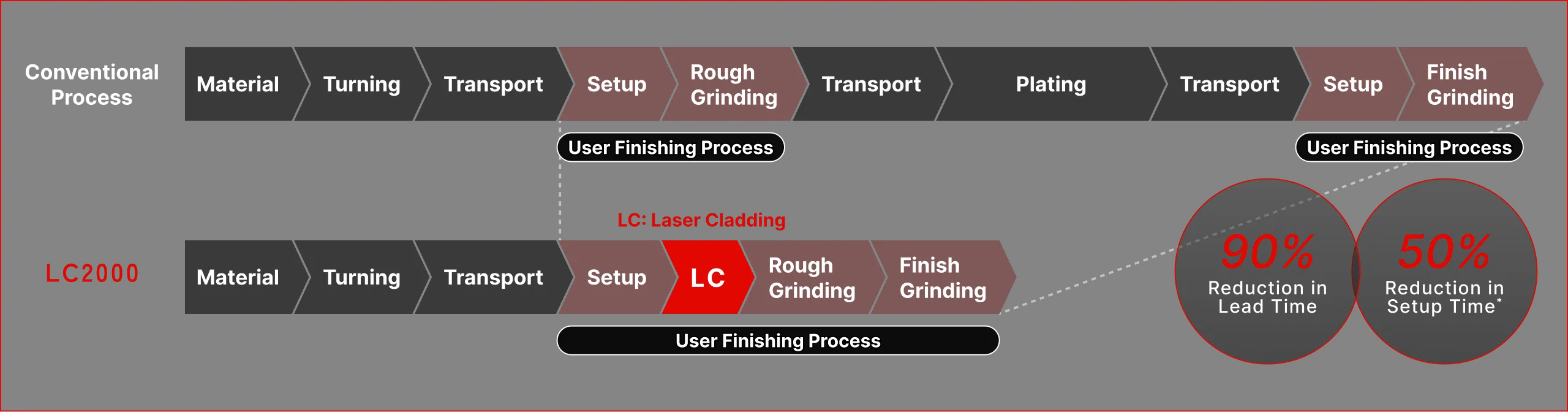
Complete everything from surface treatment to finish grinding in a single chuck on the machine. Shorter lead times improve production responsiveness and help create new order opportunities.
Problems
Process Planning & Production Management
Reassess outsourced processes to handle tight deadlines and urgent orders.
Reducing Finishing Losses
Reduce remakes caused by damage or undersize after grinding.
Repair & Remanufacturing
Restore used components instead of scrapping them.
Enhanced Surface Functionality
Achieve surface properties tailored to your application.
Environmental Compliance
Prepare for tighter regulations on environmentally hazardous substances.
Contact us for free consultation on implementation or technical questions.
About
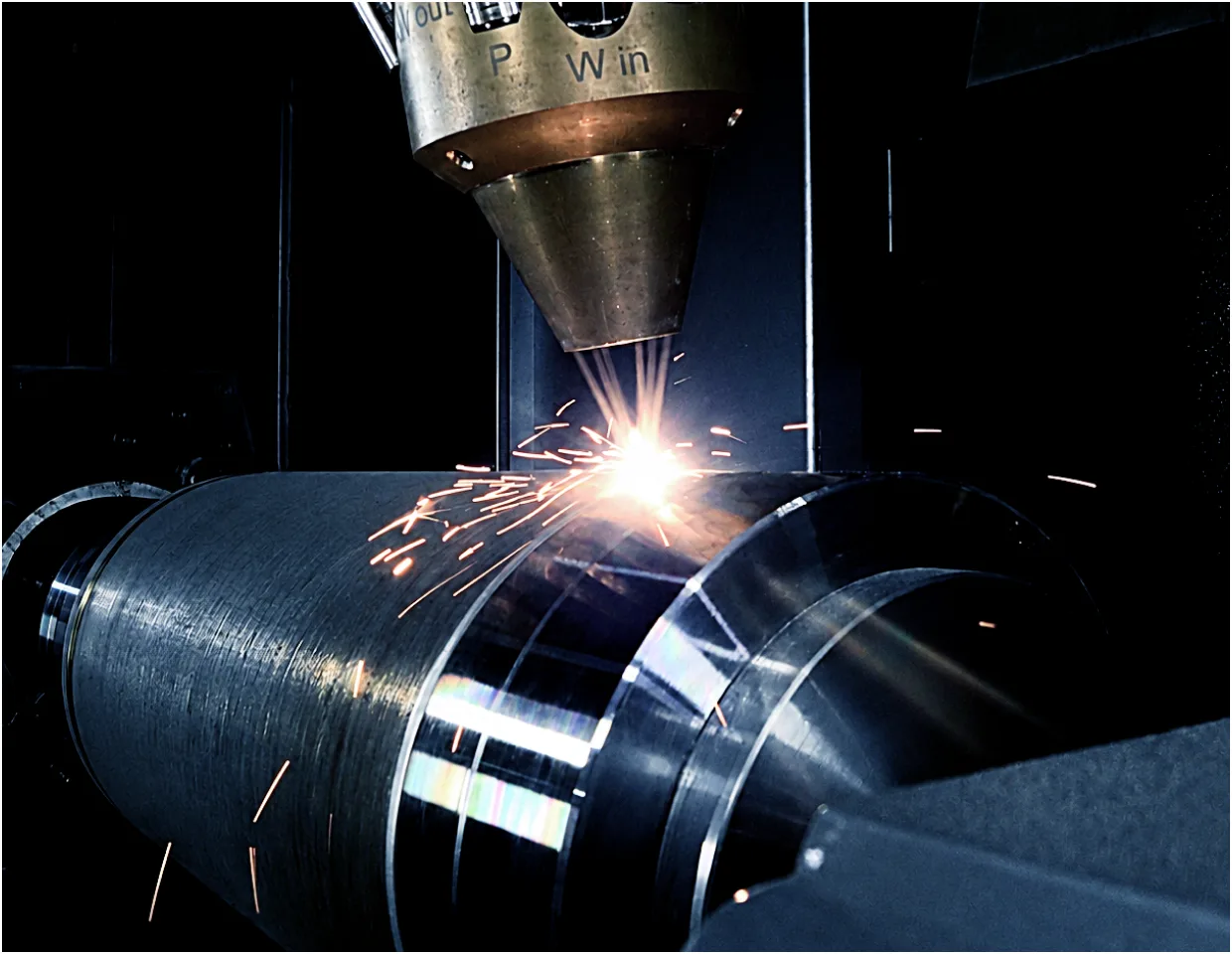
Laser cladding uses a laser to melt and deposit metal powder, forming a clad layer on the workpiece surface.
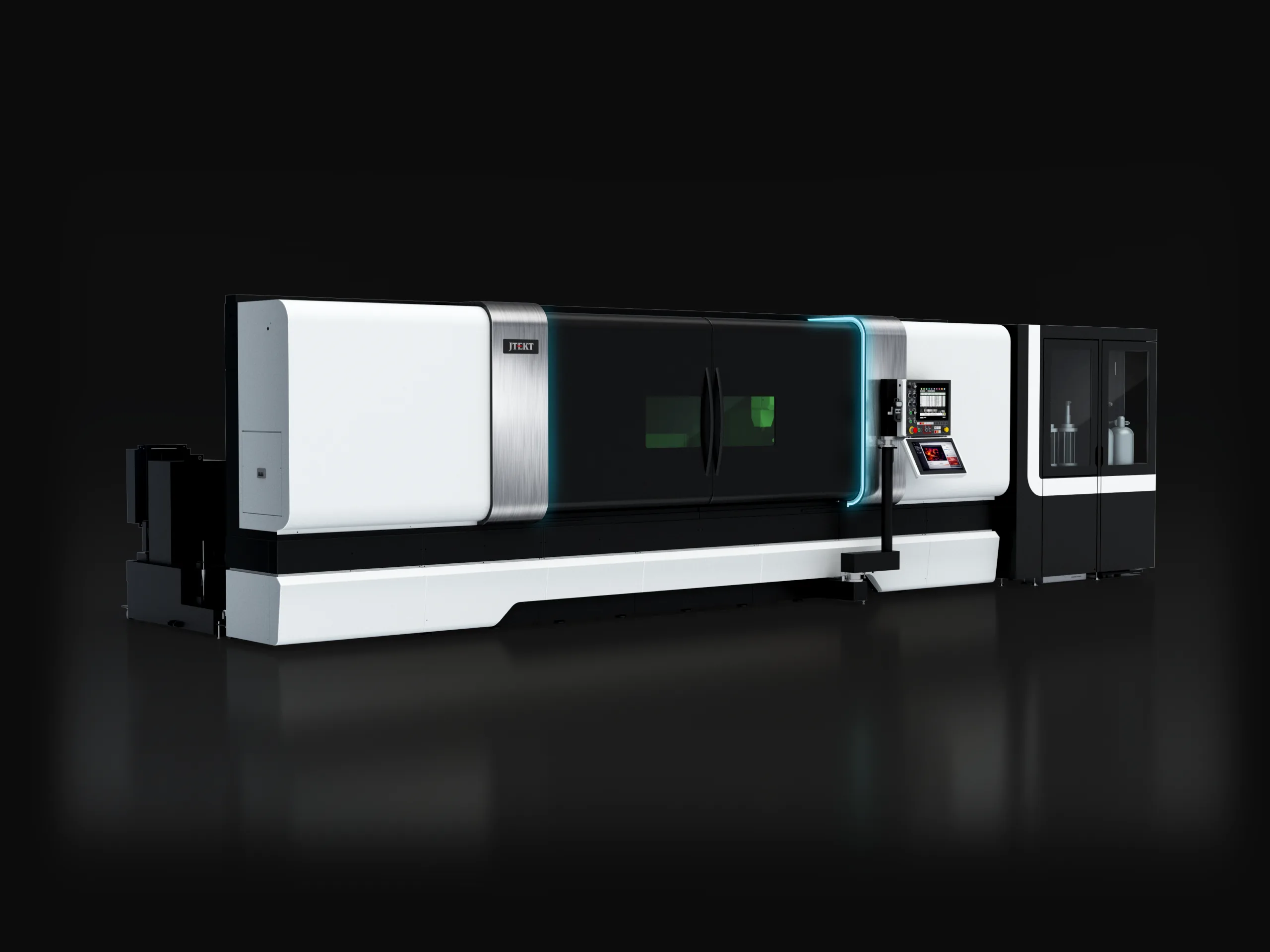
Based on JTEKT’s proven G3 Series CNC cylindrical grinder, the LC2000 integrates a laser cladding system with the machine.
Surface treatment through finish grinding is completed in a single chuck on the machine. Also repairs worn or damaged areas.
Value
01
Reducing outsourced plating cuts transport and waiting time. In-house control shortens lead times and reduces costs while minimizing delivery variation.
02
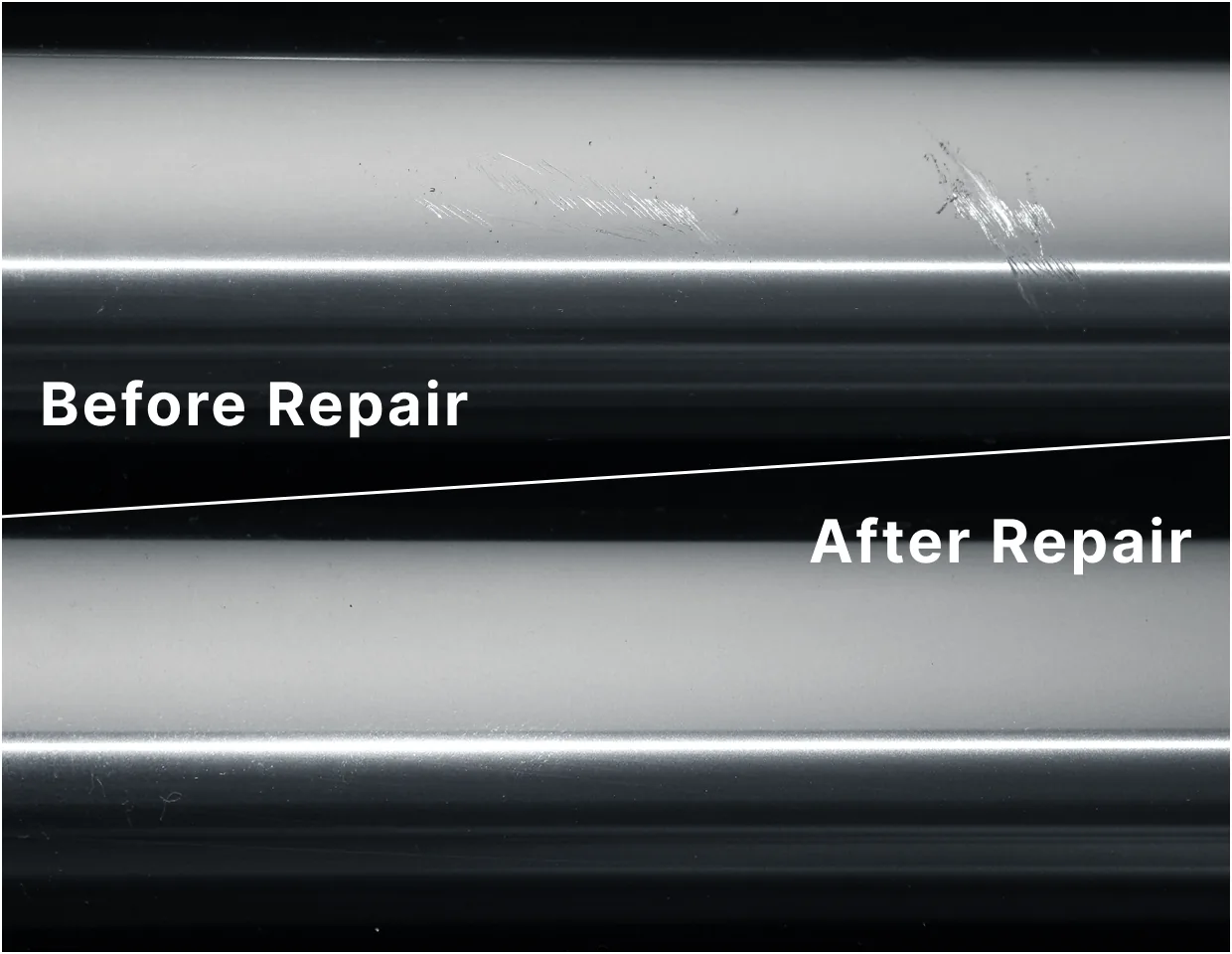
A clad layer up to approximately 2 mm thick enables build-up repair of worn or damaged areas. From post-grinding damage and undersize recovery to used-part repair, it helps reduce scrap and remakes.
03
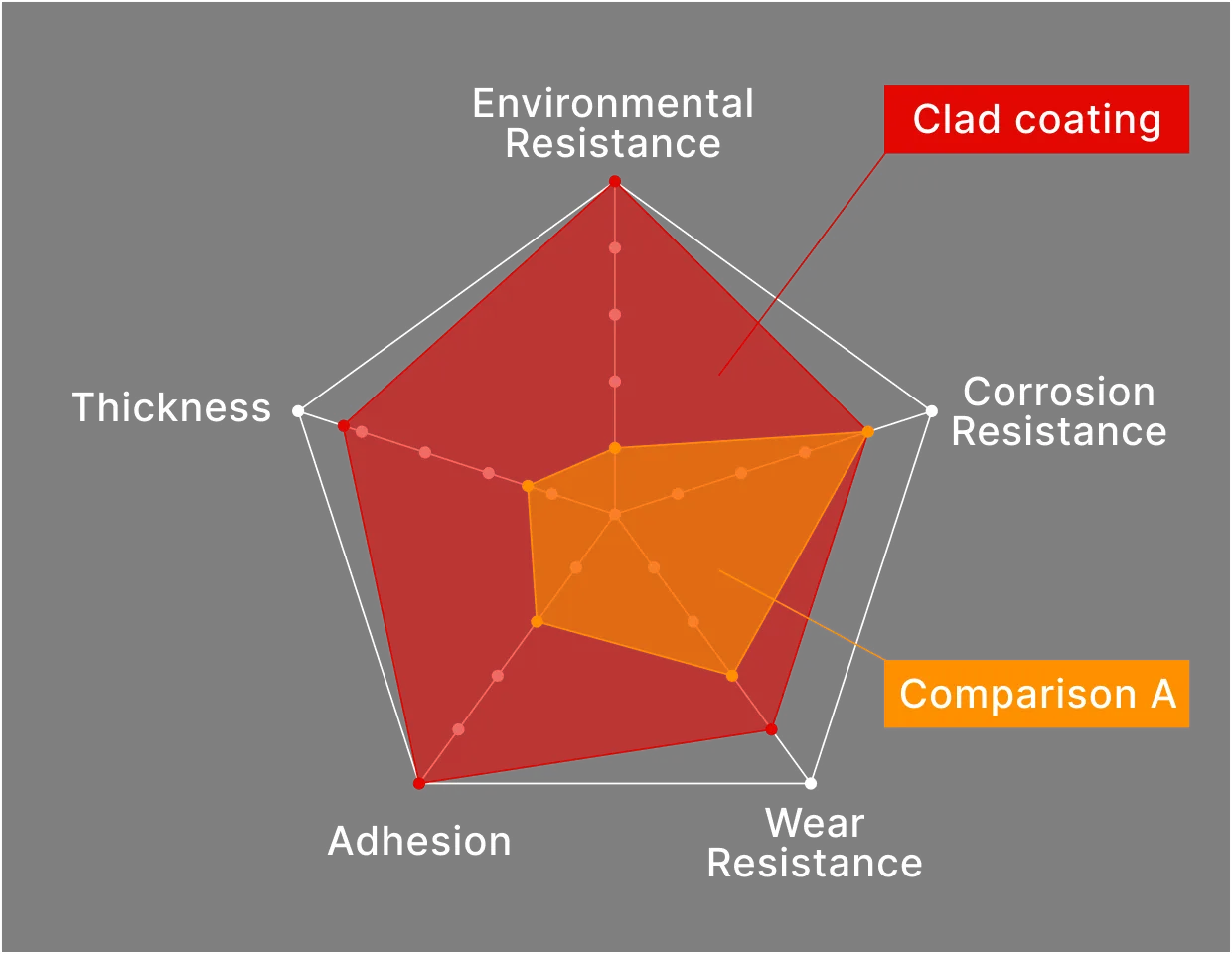
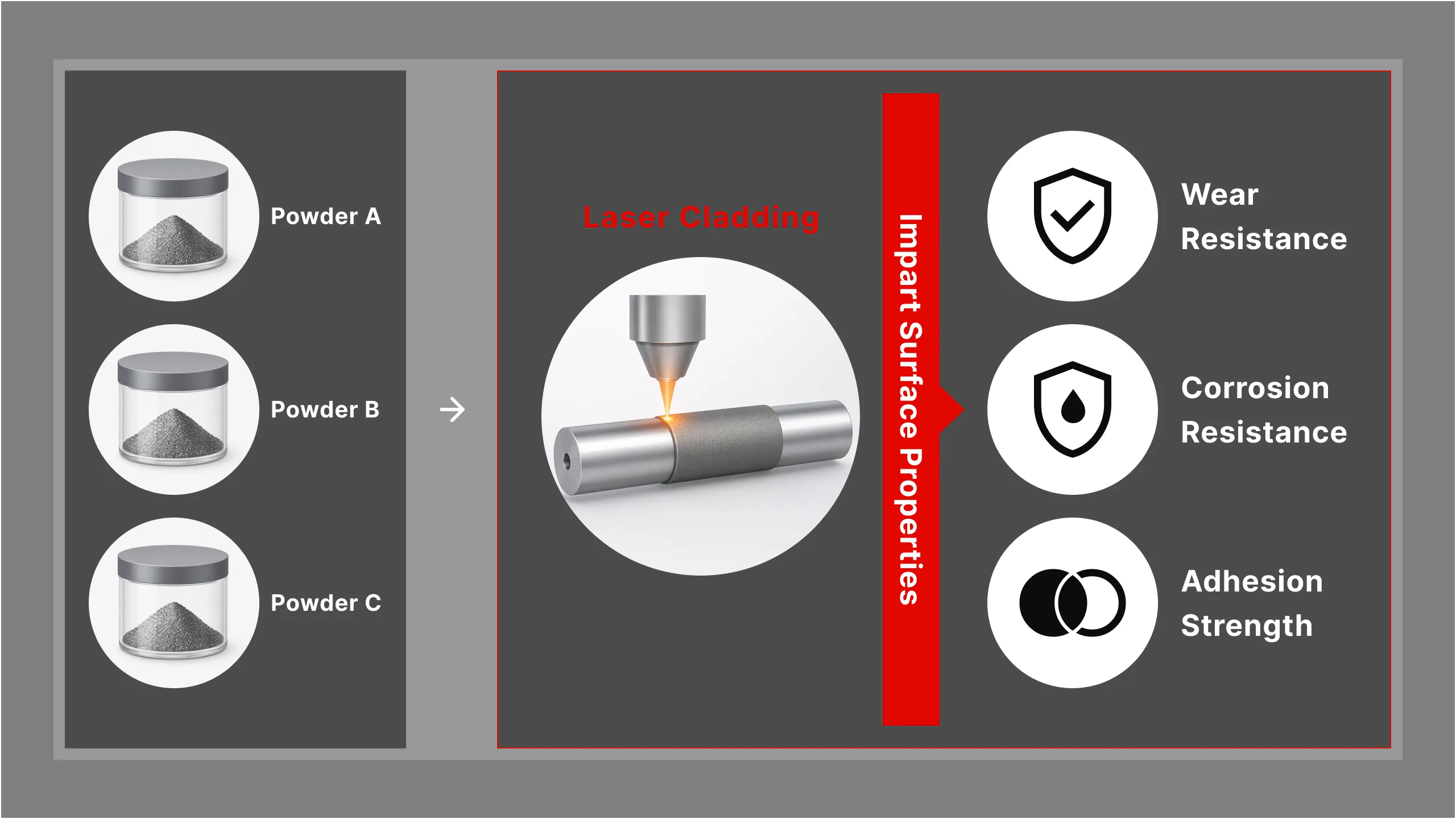
Commercially available metal powders can provide application-specific properties such as wear resistance, corrosion resistance, and adhesion strength.
The hexavalent chromium-free process also helps reduce environmental impact and support regulatory compliance.
Contact us for free consultation on implementation or technical questions.
Applications
The following are examples. Further applications can be developed to meet your needs.
Repair Damage and Undersize After Grinding
Minor damage or undersize in the final process can result in scrapping or remaking a workpiece after all prior work is complete.
The LC2000 enables recovery through laser cladding build-up repair, helping bring the workpiece to the required finished condition.
Scroll horizontally to view the full content.
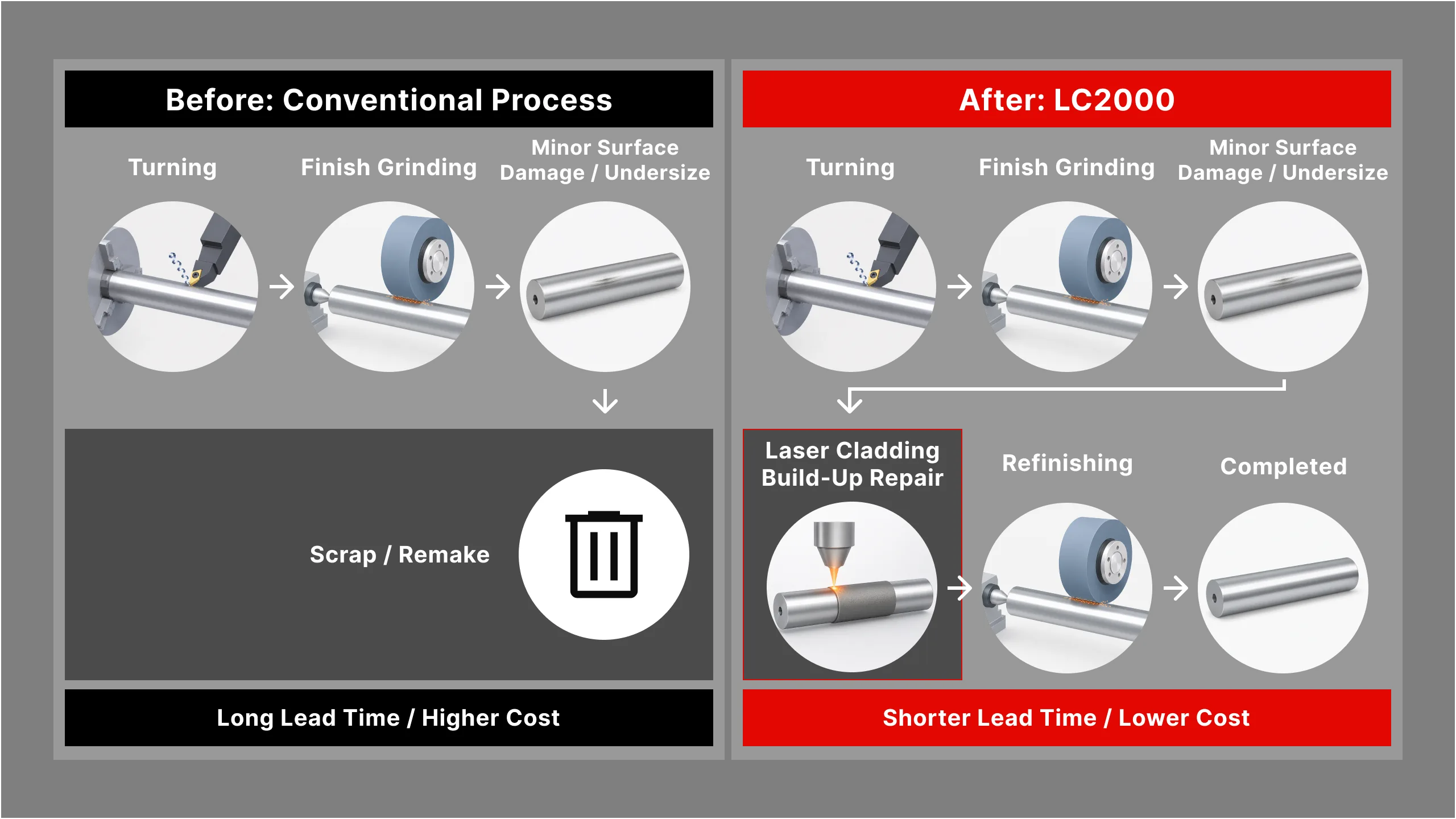
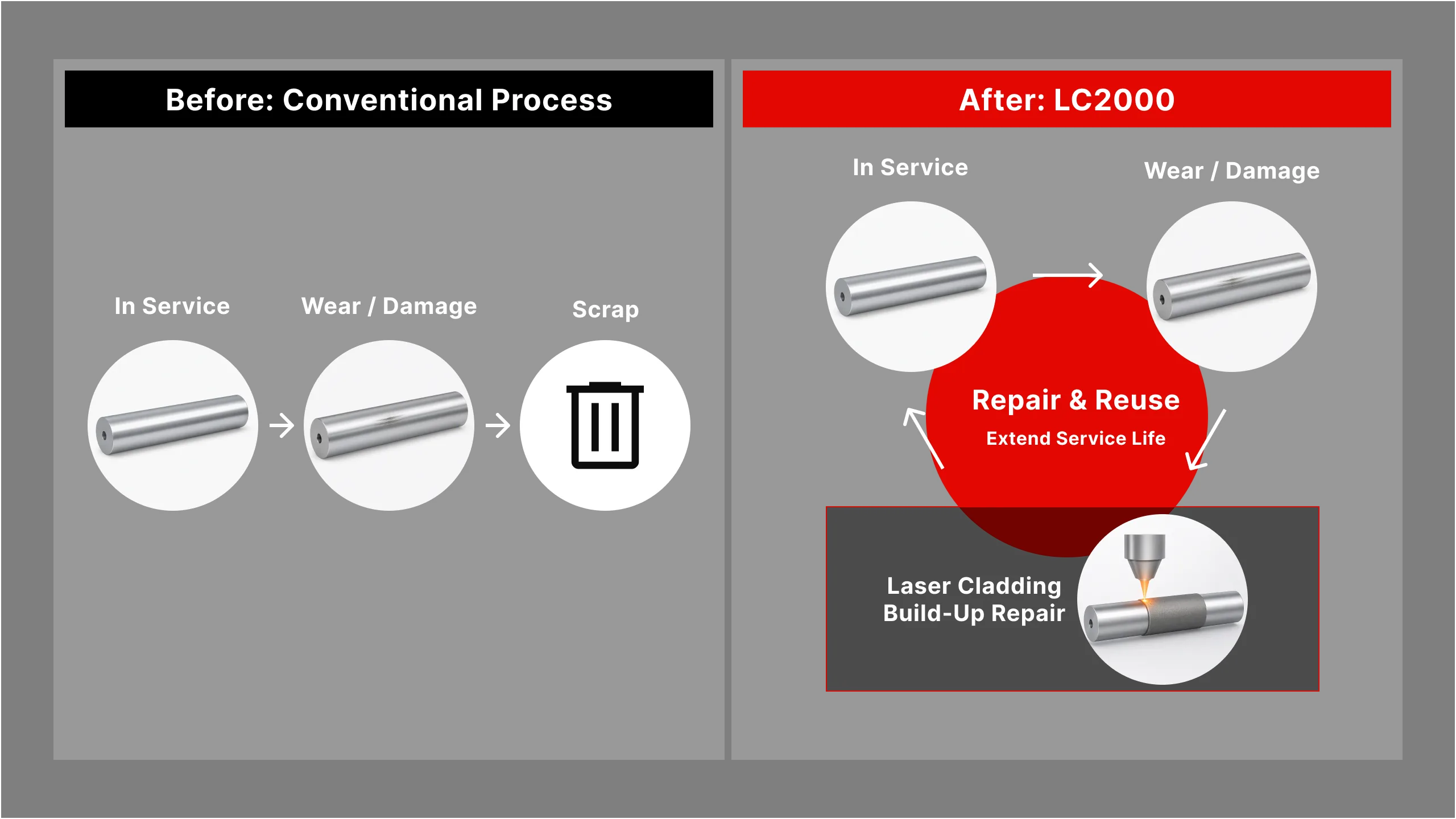
Restore Worn Parts and Extend Service Life
Laser cladding build-up repair restores worn or damaged areas on hydraulic rods, shafts, and rolls used in construction equipment, agricultural machinery, automotive-related equipment, and more.
It helps reduce scrap and replacement, supporting repair and remanufacturing.
Scroll horizontally to view the full content.
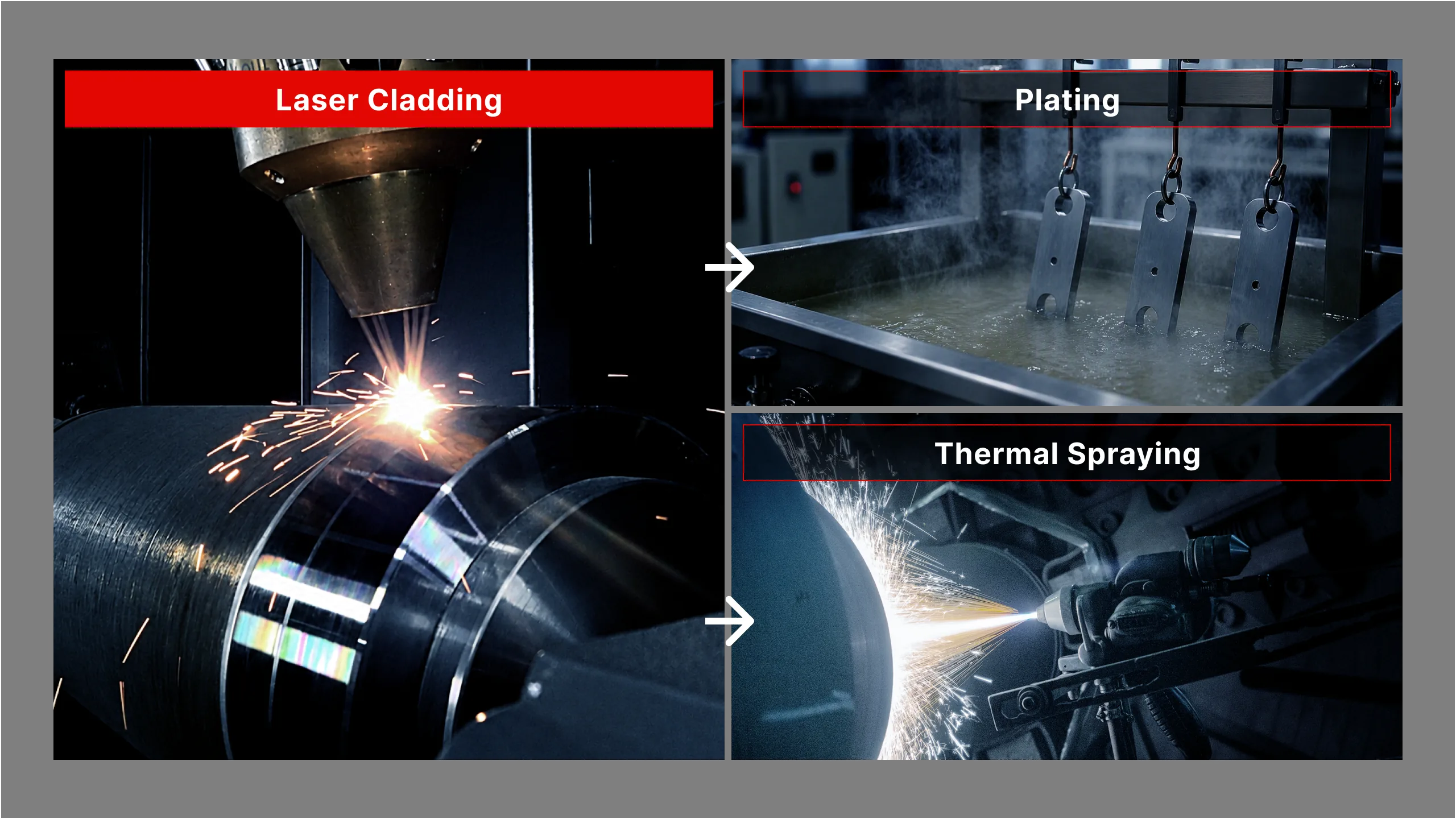
Shorten Processes While Retaining Surface Specifications
Plating and thermal spraying can involve operator-dependent processes.
A laser-clad base layer can shorten the process and reduce variation while retaining the required top-layer specification.
Scroll horizontally to view the full content.
Enhance Product Value with Tailored Surface Properties
Parts exposed to wear or corrosion require surface performance suited to their operating environment.
Standard or custom-developed powders can provide application-specific properties, supporting customer-specific specifications and new product or business proposals.
Scroll horizontally to view the full content.
Workpieces
Applicable to industries including construction equipment, agricultural machinery, steel, papermaking, and industrial machinery.
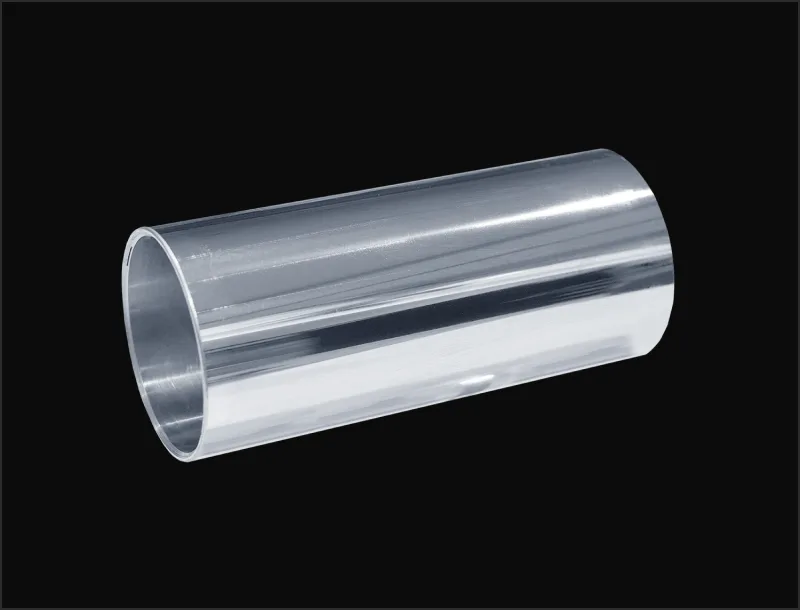
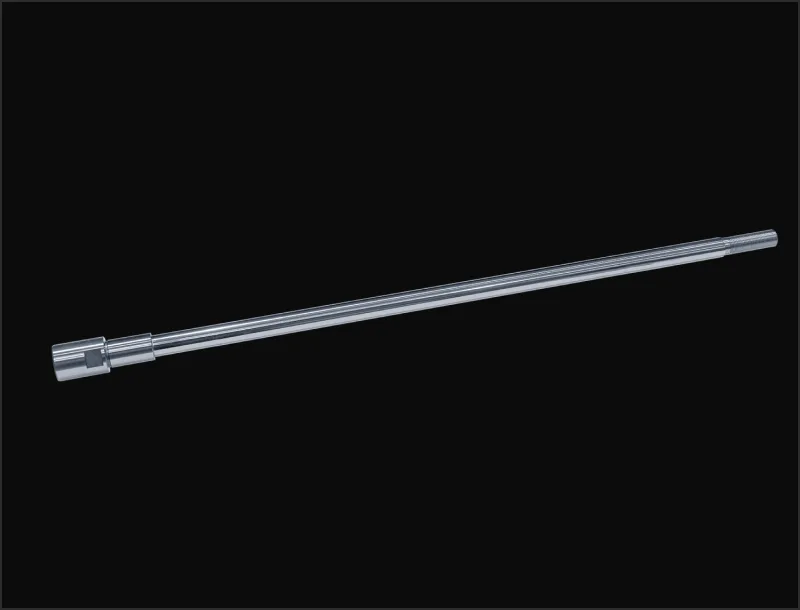
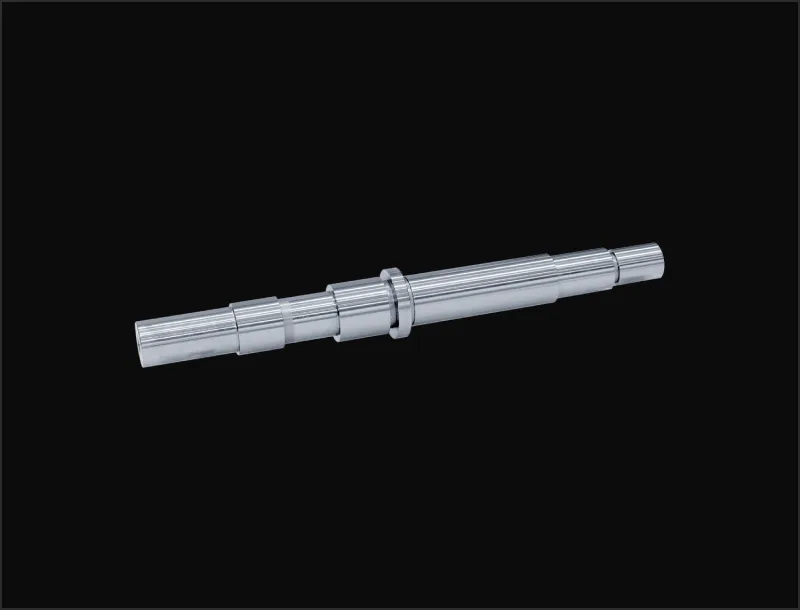
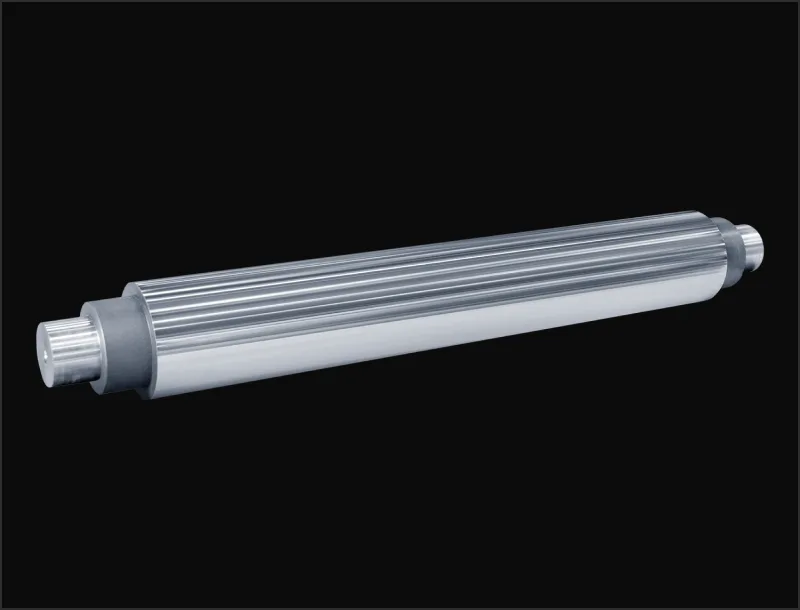
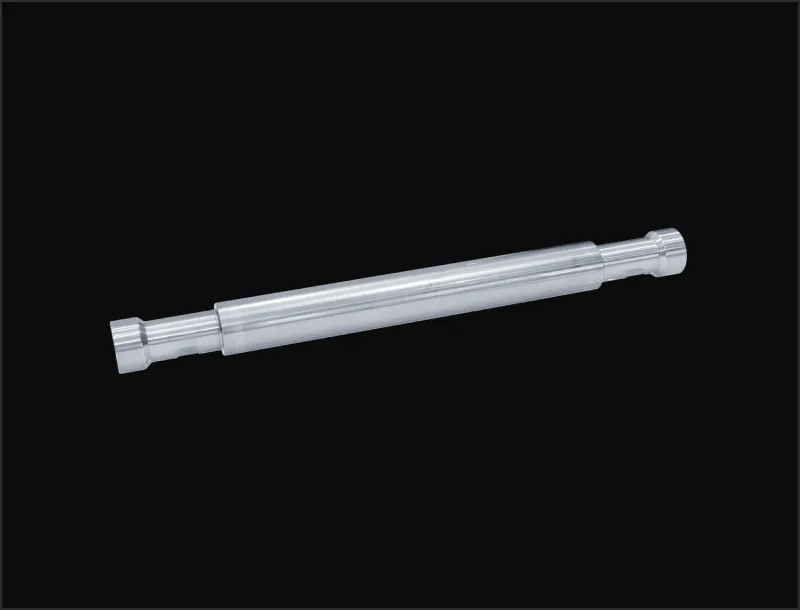
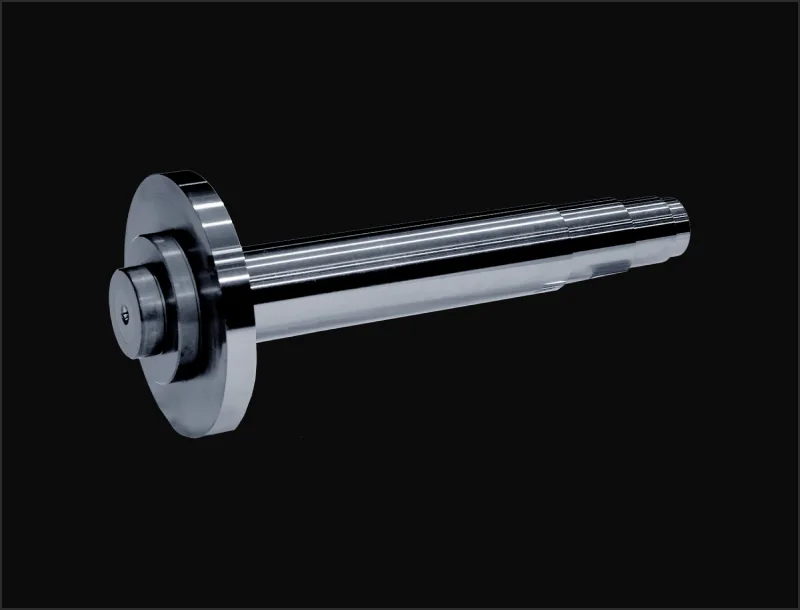
Suitable for cylindrical workpieces such as rolls, shafts, and hydraulic rods, and a wide range of materials including stainless steels such as SUS420J2.
Specifications
| Distance between centers (mm) | 2,000 | |
|---|---|---|
| Swing over table (mm) | φ320 [φ400] | |
| Height from the floor to center of the machine (mm) | 1,080 | |
| Max. grinding diameter (mm) | 0~φ300 | |
| Load between centers (kg) | 150 | |
| Wheel spindle | STAT BEARING™ (fluid) | |
| Wheelhead | Rapid Traverse Speed m/min | 10 [15] |
| min. setting increment mm | φ0.0001 | |
| Operation panel | TOYOPUC ®-Touch | |
| Control unit | TOYOPUC ®-GC70 | |
| Electrical equipment | Power supply voltage AC200V, Control voltage DC24V | |
| Laser oscillator | Laser type | Diode laser (Class 4) |
|---|---|---|
| Max. output W | 5,000 | |
| Laser product class | Class 1 (IEC 60825-1) | |
| Torch | Type | Swivel-type laser torch |
| Swivel angle ° | 0 ± 45 | |
| Powder focal distance mm | 25~30 | |
A Grinding Machine Opens Up “Infinite Possibilities.”
Laser Cladding & Grinding Machine
Contact us for free consultation on implementation or technical questions.