
- JTEKT TOP
- Sustainability
- JTEKT‘s Sustainability
- Sustainability Governance Structure
Sustainability Governance Structure
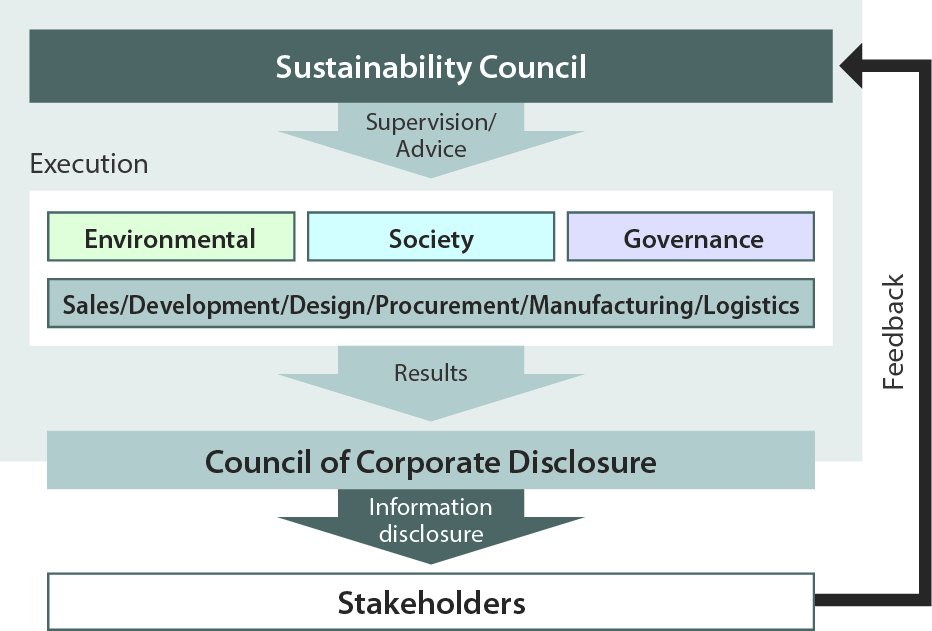
JTEKT has established a corporate governance structure with the Board of Directors at its core. To determine key policies for sustainability and to supervise and provide guidance on internal initiatives, we have formed the Sustainability Council, composed of all members of the Board of Directors--including outside Officers--as well as management officers and CxOs (chief officers of each function within the company).
The themes discussed at the Sustainability Council are translated into concrete initiatives by the departments responsible for related operations and reflected in our business activities. These activities are disclosed through the Integrated Report (JTEKT Report), the Corporate Governance Report, the Annual Securities Report, and on our corporate website (https://www.jtekt.co.jp/e/sustainability/).
The Corporate Disclosure Committee, mainly composed of members from the Corporate Management Division and related departments, reviews the content and wording of disclosures to ensure the information is communicated accurately and comprehensively to stakeholders. Feedback from stakeholders is reported to the Sustainability Council and used as the foundation for future initiatives.
Various committee and function meeting
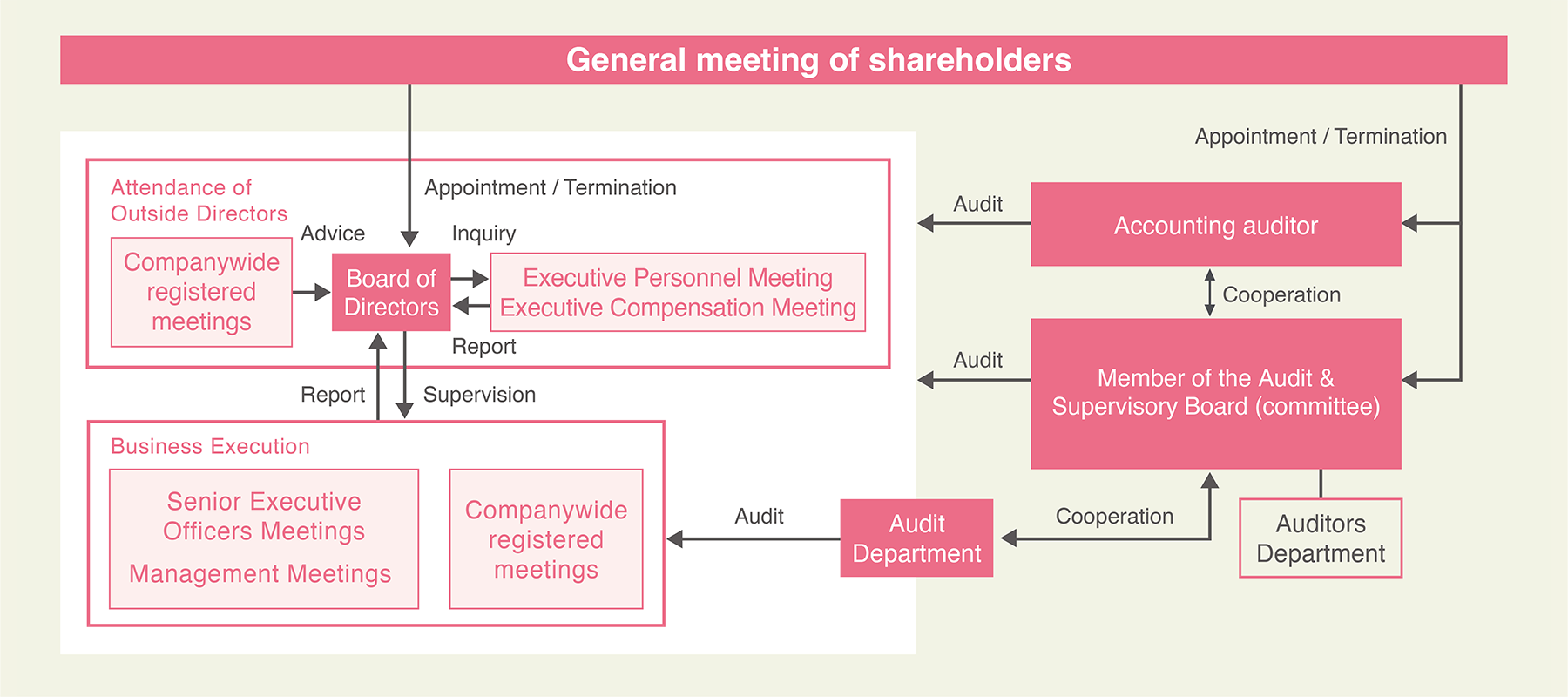
For important themes, JTEKT has esablished specialized committees and functional meetings to formulate and promote activity plans.
Management Meetings of JTEKT
The Materiality Analysis
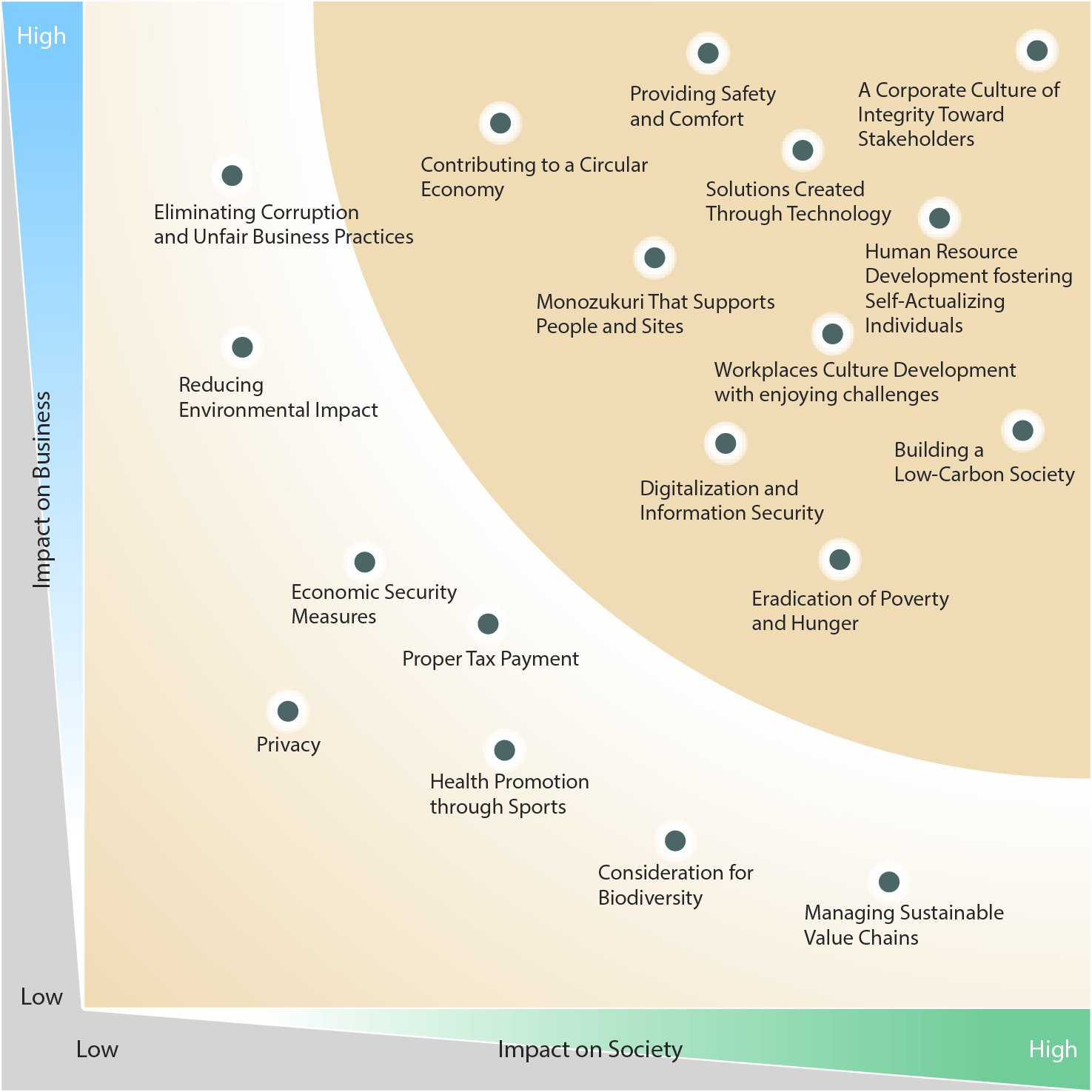
In 2024, JTEKT reviewed and refined the materiality identified in FY2020 based on the formulation of the JTEKT Group 2030 Vision and the Second Medium-Term Business Plan. This was done using the Double Materiality approach, which involves assessing the importance of each issue from two perspectives: the impact of societal challenges on our business, and the impact of our business on society.
Our materiality represents the societal challenges JTEKT prioritizes addressing through its business activities. By referencing these themes in the formulation of management strategies and other corporate initiatives, JTEKT aims to enhance corporate value by providing solutions unique to JTEKT and pursue sustainable development in partnership with society.
■ "JTEKT-Unique" Materiality
In reviewing and refining our materiality in 2024, we referenced the European Sustainability Reporting Standards (ESRS) when setting material topics. Furthermore, we identified social issues not covered by the ESRS that we believe should be strategically addressed, based on JTEKT's MVV and our Second Medium-Term Business Plan.
To clearly position these as "JTEKT-Unique" materiality, the Sustainability Council--comprising our management team--refined both the content and the way they are expressed. Materiality is subject to change in response to societal conditions and our strategic direction, and we will conduct regular reviews.
| Materiality of JTEKT | Our Intent | Examples of Related Non-Financial KPIs | Relevance to Key Initiatives of the Second Medium-Term Business Plan |
|---|---|---|---|
| Solutions Created Through Technology | Emphasizing Mission, Vision, and the transition to a solution business | No. of solutions created for manufacturing/mobility innovation |
Solution Co-Creation Cente / Technology Platform |
| Providing Safety and Comfort | One of the ultimate goals of manufacturing and a critical challenge for the mobility society | ||
| Manufacturing That Supports People and Sites | Ecient production activities through products, supporting manufacturing in Japan and globally | ||
| Building a Low-Carbon Society | Organizing adaptation and mitigation measures for climate change through carbon neutrality |
CO2 reduction target |
Promoting Carbon Neutrality |
| Contributing to a Circular Economy | Participation in realizing the circular economy, including e ective water resource utilization |
Waste emissions |
Circular Economy Initiatives |
| Human Resource Development Fostering Self-Actualizing Individuals |
Creating an attractive working environment and the cultivation of human resources | 1) Employee engagement (eNPS score) 2) Outcomes of Health and Productivity Management (Acquired White 500 accreditation) 3) Acquisition rate for childcare leave by male employees |
People and Site-First Management |
| Fostering a workplace environment that leverages diverse perspectives, based on physical and psychological safety | |||
| Creating Workplaces Where Challenges Are Embraced |
|||
| Digitalization and Information Security |
Achieving advanced and ecient management and operations while preparing for the increased risks that come with it | No. of signi cant incidents | Digital Festival / Digital Monozukuri |
| Managing a Sustainable Value Chain |
Resilience through coexistence and mutual prosperity via fair transactions |
1) No. of serious human rights violations |
Strengthening Management Foundations |
| A Corporate Culture of Integrity Toward Stakeholders |
Upholding quality and rules, positively reframing "zero tolerance for misconduct" |
Appropriate Corporate Disclosure
JTEKT discloses information about JTEKT Group appropriately and fairly in order to increase management transparency and enhance corporate value. In August 2016, the Council of Corporate Disclosure the Corporate Disclosure Committee was established, comprising of concerned directors and managers of JTEKT' s Corporate Headquarters with the purpose of examining and confirming whether the timing, content and means of corporate disclosure are appropriate. In April 2020, Corporate Disclosure Policy was published, showing our atitude toward JTEKT corporate disclosure.
JTEKT will continue to conduct constructive dialogue and publish information actively toward establishing the relationship of trust with stakeholders, including shareholders, investors, customers, business partners, and local communities.