
- JTEKT TOP
- Sustainability
- Environmental Report
- Harmony with nature, Biodiversity
Harmony with nature, Biodiversity
Thorough management of chemical substances and reduction of environmentally hazardous substances
The regulations to administrate the usage and discharge of environmentally hazardous substance which have adverse impact on ecosystems and human health are being strengthened. Additionally, companies are required to implement measures to thoroughly manage and reduce the environmentally hazardous substance throughout the entire product lifecycle, from production to disposal, and comply with various related regulations.
As a MONOZUKURI (manufacturing) company, it is a social responsibility to reduce the environmentally hazardous substance. JTEKT thoroughly coontrols the amount used and emitted during production.
Biodiversity conservation
The diversity of living things on Earth is rapidly disappearing due to the shrinking of habitats from the expanded destruction of nature, and "preventing the loss of biodiversity" is one of the SDGs goals. Corporate activities depend on the benefits we receive from the natural world, and at the same time, they have a significant impact on biodiversity. This is why it is important that companies are proactively involved in biodiversity conservation activities such as protecting the natural habitat. In JTEKT's Biodiversity Conservation Action Guidelines (formulated in March 2011), JTEKT positions biodiversity conservation as an important social issue supporting lives and livelihoods, and is expanding the circle of activities related to biodiversity by promoting initiatives at each plant that make the most of local characteristics.
Environmental Action Plan 2025 / FY2024 Activity Result
| Category | Initiative items | Target and initiative policy | FY2024 Activity Result | Assessment |
|---|---|---|---|---|
| Thorough management of chemical substances and reduction of environmentally hazardous substance | (1) Reduction of environmentally hazardous substance in production activities | 1. Reduce volume of discharged/transferred substances regulated by PRTR 2. Reduce environmentally hazardous substance through the complete elimination of VOC use in the cleaning process |
1. Volume of discharged/transferred substances regulated by PRTR:118.7t(+17.6t compared with FY2023) 2. Switching to alternative oil in the production process has been completed at 4 out of the 5 target plants. *Substances regulated by PRTR: Factors for increase from the previous year=>Increase in target chemical substances contained in newly adopted coolants due to measures to extend service life, etc |
△ |
| Biodiversity Conservation | (2) Biodiversity initiatives | 1. Promote environmental protection activities based on the Biodiversity Conservation Action Guideline 2. Promote biodiversity conservation activities in the JTEKT group "connecting with the community" Increase the number of activity participants to over 3,000 in the entire JTEKT group by FY2025 |
1. Organize environmental education for children and participate in activities sponsored by local governments 2. Participation in Biodiversity Activities in FY2024 Participants of 4,839 employees and related persons in the entire JTEKT group (FY2024 target: 2,640 members) |
Reduction of environmental impacts in production activities
Reduction of the volume of discharged/transferred substances regulated by PRTR
JTEKT is working to reduce the chemical substances released into the environment as a result of its production activities.
The amount of substances regulated by PRTR Law discharged in FY2024 was approxi.118.7t, an increase of approx.17.6t compared with the previous year. This was due to an increase in the amount of target chemical substances contained in coolants newly adopted as part of measures to extend product life. We will continue to promote the reduction of these chemical substances in FY2025 and beyond.

*Past results have been partially revised after reconfirming discharged/transferred volume
*Due to an increase in regulated substances following legislative amendments, the figures for FY2023 and FY2024 have risen.
Reduction of environmentally hazardous substance through the complete elimination of VOC use in the cleaning process
JTEKT is working to completely eliminate the use of VOC in the cleaning process by FY2025 in order to reduce hazardous substances and risks pertaining to safety and fire prevention.
In FY2022, JTEKT started long-term operational tests on production lines using alternative oils and the switchover was completed at 4 out of the 5 plants in FY 2024. The remaining 1 plant is scheduled to be switched by September 2025.
Proper storage and control of PCB devices
PCB (polychlorinated biphenyl), which were widely used in insulating oils, must be stored, disposed of, and reported according to the Act on Special Measures concerning Promotion of Proper Treatment of PCB Wastes. At JTEKT, PCB is notified to the authorities, properly stored, and disposed of in accordance with this act.
In FY2024, we removed and analysed capacitors used in production equipment and disposed of equipment that had been stored as low-concentration PCB waste. Continuously, we will replace the capacitors in the production equipment that are at risk of low-concentration PCB contamination, and after concentration analysis, we will carry out appropriate disposal for the removed small capacitors.
Initiatives for soil and groundwater
JTEKT continues to implement ongoing measures at two plants in response to the groundwater pollution caused by "trichloroethylene" contained in detergents and other materials.
The Kariya Plant is implementing the "prevention of external leaks", and the Okazaki Plant is implementing "complete purification" in addition to the "prevention of external leaks".
To prevent leaks outside the plant premises, we have continually been using the pumping and aeration system* since 1998.
At the Okazaki Plant, in 2020, we injected nutrients into the ground to enhance the activity of microorganisms that break down chloroethylene, thereby promoting decomposition. Currently, decomposition is proceeding slowly, so we will continue to monitor and purify the site.
JTEKT regularly reports the assessment results of groundwater measurements to government agencies and provides local residents with explanations at community meetings.
*Pumping and aeration system: A system of pumping groundwater up and sprayeding, and blowing air from below to aerate and separate organic solvents to be removed by adhering to activated carbon.
Measured trichloroethylene value (maximum value)
Kariya Plant
FY2023:0.289mg/L FY2024:0.296mg/L Current status:Purifying
Okazaki Plant
FY2023:0.005mg/L FY2024:0.008mg/L Current status:Purifying
(Environmental standard: 0.01 mg/L)
Initiatives to replace CFC devices
Production of HCFC refrigerants has been discontinued since 2020 in accordance with the Montreal Protocol and Ozone Layer Protection Act.
JTEKT will sequentially replace its R22 air conditioners to protect the ozone layer and reduce greenhouse gases.
Initiatives for biodiversity
Biodiversity Conservation Action Guideline
In order to reduce the environmental burden created by our business activities and be mindful of biodiversity, JTEKT established the "Biodiversity Conservation Action Guidelines" in March 2011.
Biodiversity Conservation Action Guideline

JTEKT's aspiration
JTEKT's biodiversity conservation activities focus on the three main initiatives of 1) protecting the rare living species that inhabit or grow at each plant, 2) enhancing the local natural environments surrounding each plant and 3) developing environmentally-minded professionals in order to achieve conservation of biodiversity on an ongoing basis. We engage in activities to protect the rare living species at each plant based on objective evaluations incorporating the viewpoints of experts and academics.
Biodiversity risks and opportunities in business activities
JTEKT's business activities and natural capital are influenced by each other. In the life cycle of our business activities, which begins with the procurement of raw materials, we see the use of resources such as water and energy, as well as emissions into the air and water as risks to biodiversity.
We also see the provision of products that lead to improved environmental performance of vehicles and other equipment, the reduction of CO2 emissions through this, the maintenance of watershed conservation functions through forest conservation activities, and the reduction of flood risks at business locations as opportunities for biodiversity.

Impact on biodiversity
We conducted pressure assessments on biodiversity using the WWF Biodiversity Risk Filter (BRF)* targeting all JTEKT Group sites and the sites of 40 major suppliers in Japan (equivalent to 70% of the procurement amount). As a result, none of the sites were rated as high risk (4.5 or higher on a scale of 1 to 5).
We will continue to promote activities to the maximum extent possible so that our business activities do not have an impact on biodiversity due to emissions into the air and waters or soil pollution.
*WWF Biodiversity Risk Filter (BRF)
Risk tools related to biodiversity published by the World Wide Fund for Nature
Map of Biodiversity Conservation Activities
The JTEKT Group has business sites all over the world, from Japan to overseas. Each business site has set its own activity theme and is continuously working to expand its biodiversity activities from dots to surface by promoting activities at each business site and linking these activities together. We will continue to promote these activities in order to expand the circle of activities.
■ Overseas

■Japan
▶ The window for the activity will pop up when you click on the name.

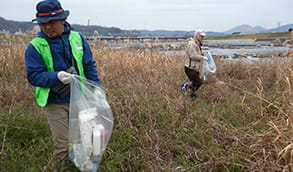
Participation in the Ishikawa Cleanup operation in Yamatogawa River
- <Purpose>
- To improve the water quality of the Yamatogawa River and revive the clear stream
- <Activity>
- Conducted cleanup activities around the Yamatogawa River and its tributary, the Ishikawa Riverbed
Simultaneous clean-up of the Yoshino River
- <Purpose>
- To conserve and restore the environment of the beautiful and approachable Yoshino River, the community works together to carry out simultaneous clean-ups and to foster an awareness of river protection.
- <Activity>
- Cleaning of the Yoshino River estuarine tidal flat, where rare species inhabit, was carried out during the River Protection Month.


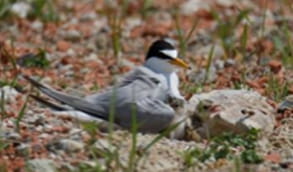
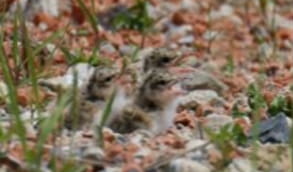
Conservation of the little tern nesting ground
- <Purpose>
- To conserve the habitat of the rare little tern (koajisashi) designated as "Breeding Population: Endangered (EN)" and "Migrating Population: Vulnerable (VU)" on the Aichi Prefecture Red List
- <Activity>
- Conserved the nesting environment by weeding and installing shelters
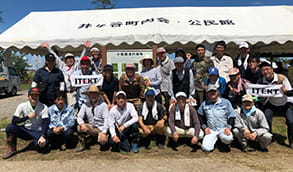
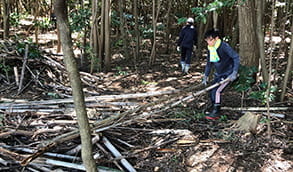
Participation in the conservation of the rabbit-ear iris habitat at the Kozutsuminishi Pond
- <Purpose>
- Participation in the conservation of the rabbit-ear iris habitat at the Kozutsuminishi Pond designated as a national natural monument
- <Activity>
- Weeded reed and twig rush, the natural enemies of the iris, and cut and removed bamboo that had proliferated in the hilly area, an important source of water for the pond
Satoyama conservation activity of the "Okazaki Nature Experience Forest"
- <Purpose>
- To conserve the local satoyama "Okazaki Nature Experience Forest" to pass on the rich nature of satoyama (bordering area of foothills and farmland) to the future
- <Activity>
- Cared for the "Okazaki Nature Experience Forest" by maintaining the biotope and bamboo forest, weeding the undergrowth, and repairing the walking path

Conservation of the sea turtle nesting ground "Sandy Beach Fureai Walk"
- <Purpose>
- Conservation of the nesting grounds of loggerhead turtles designated as a Vulnerable species
- <Activity>
- ・Collected garbage on the sandy beach
・Creation of a sand arresting hedge
・Conducted environmental learning about loggerhead turtles


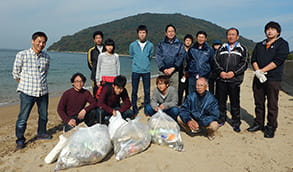
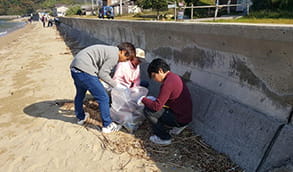
Participation in the Kagawa satoumi preservation activity
- <Purpose>
- To preserve a sound condition of the sea, perceive the sea and land integrally to maintain the water quality of the Seto Inland Sea
- <Activity>
- Participated in marine garbage collection and environmental education at the coast of the Seto Inland Sea
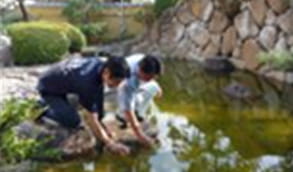
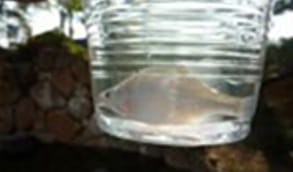
Conservation activity for Japanese rosy bitterling
- <Purpose>
- To protect the Japanese rosy bitterling (Nippon baratanago) listed in the 4th Red List as "Critically Endangered" and in the Nara Prefecture Red Data Book as "Threatened"
- <Activity>
- Bred Japanese rosy bitterling in the biotope at the plant with the support of Kindai University; will expand the circle of protection by transferring the bred plants to companies and schools including nearby group companies
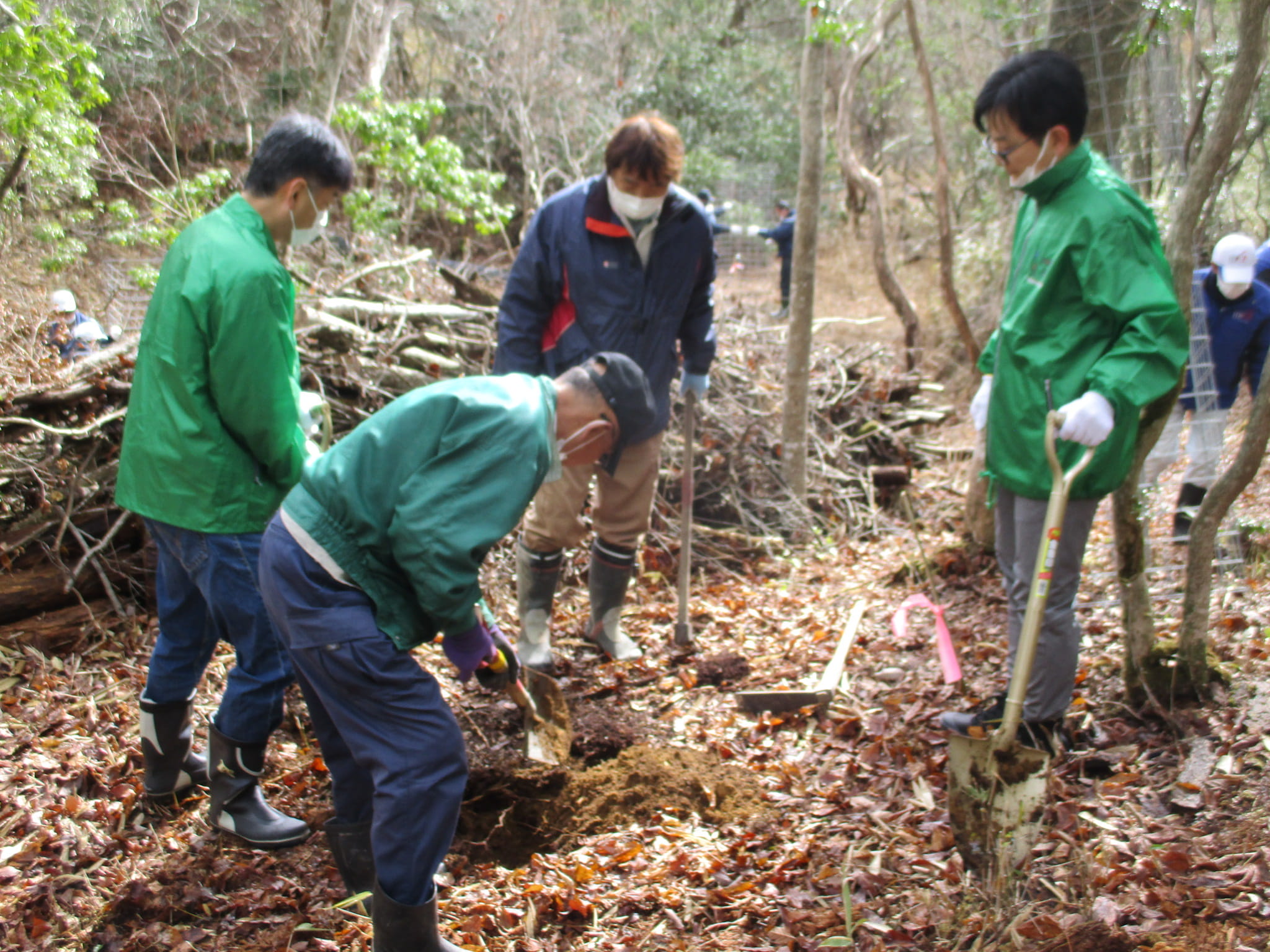
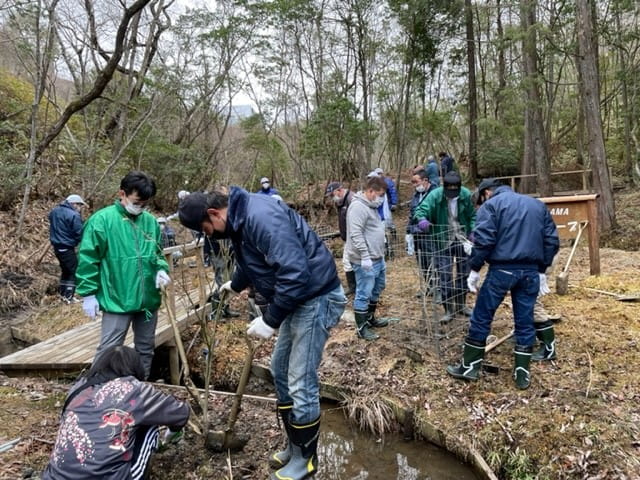
Conservation of the Iga Proving Ground Forest of Symbiosis
- <Purpose>
- To prevent miscellaneous forestation in the forest around the Iga Proving Ground
- <Activity>
- Signed a Social Contribution Forest Agreement with the Mie Forest Management Office for approximately 25.4 ha of forest around the Iga Proving Ground and planted resistant red pine trees to prevent the deterioration of pine
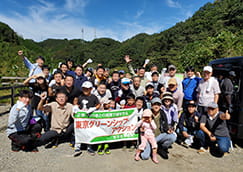
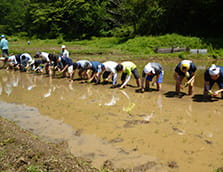
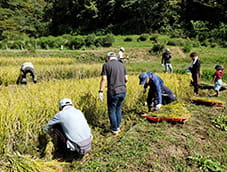
Participation in the Tokyo Greenship Action
- <Purpose>
- To conserve the Yokosawairi Satoyama Conservation Area, one of the conservation areas in Tokyo
- <Activity>
- Implemented satoyama environmental conservation activities such as planting rice and removing waterweed from paddy fields in collaboration with the local NPO, "Yokosawairi Tanbonokai" and Tokyo City.
Participation in the Iruma River Cleanup Campaign
- <Purpose>
- To preserve the water quality of the Iruma River
- <Activity>
- Conducted cleanup activities along the Iruma River

Kitayama Wetland Conservation
- <Purpose>
- Ecosystem conservation of Kitayama Wetland designated as a natural monument in Okazaki City and Aichi Prefecture
- <Activity>
- Extermination of weeds including non-native plants found in the wetlands
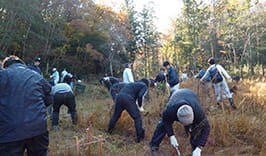
Tree-Planting Project in Asahi Area, Toyota City
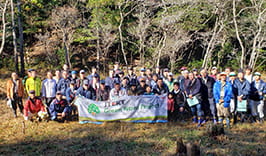
- <Purpose>
- Contribution to revitalization of local communities through conservation of Toyota's forest environment
- <Activity>
- Support for transport of timber from forest thinning for the Asahi Kinoeki Project


Case example of initiatives
Protection of Rare Species
In July 2024, JTEKT Philippines (JPC) protected a Gray's monitor lizard (Varanus olivaceous)in the vicinity of its business site and turned it over to the Department of Environment and Natural Resources. The name of Gray's "monitor" comes from the way it gazes at its natural enemy or prey from the top of a tree.
According to the International Union for Conservation of Nature and Natural Resources (IUCN), Gray's monitor is classed as vulnerable because much of its habitat has been severed or destroyed due to the conversion of land for agricultural use and logging operations. In addition to habitat destruction, they are threatened by hunting for food and illegal collection for the pet trade.
JPC will ensure that all employees are fully informed on how to address situations where such wildlife is found in an undesirable state, and we will continue to promote the protection of rare species.

Coastal Clean-up ~Beach Fureai (contact with nature) Walking~
Toyohashi Plant has been engaged in environmental conservation activities for over 10 years with the cooperation of a local NPO on the beach of Toyohashi City, where loggerhead sea turtles lay their eggs. This activity is carried out together with the primary schools in the vicinity of the plant and also aims to have children understand and think about the environment in cooperation with the local community.
In FY2024, we took a step further in our activities by focusing not only on beach cleanups but also on the restoration of sandy beaches through the construction of sand arresting hedges, creating a conducive environment for the nesting of loggerhead sea turtles. We will continue our activities to contribute to the local community and promote environmental awareness among our employees and local residents.
Reclaiming rich sandy beaches with children for the future of loggerhead turtles
https://www.jtekt.co.jp/stories/_umigame.html

Support for the "Initiative based on the Declaration of Biodiversity by Keidanren"
JTEKT announced its support for the "Initiative based on the Declaration of Biodiversity by Keidanren" by Keidanrenthe in December 2021.
This initiative aims to enhance the influence of the Japanese business community at the Conference of the Parties on Biological Diversity (COP).
From now on, we will cooperate in initiatives while working in partnership with supporting companies and organizations.
Participation in the Ministry of the Environment's "30by30 Alliance for Biodiversity"
JTEKT has been a member of the "30by30 Alliance for Biodiversity" since its founding in April 2022. This initiative aims to achieve the goal ofalting and restoring biodiversity loss (Nature Positive) by 2030, and to conserve and protect at least 30% of the country's terrestrial and marine areas (30 by 30). We will continue to actively participate in initiatives aimed at achieving our goals in cooperation with participating governments, companies and organizations.
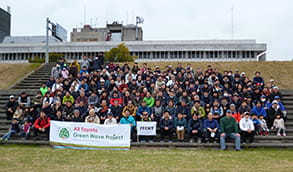
All-Toyota Green Wave Project
JTEKT participates in the "All Toyota Green Wave Project", which collaborates with Toyota Group companies on biodiversity conservation activities. Through the Green Wave Project, the "conservation activities of the little tern nesting ground" at the JTEKT Tadomisaki Plant developed into a "connecting" activity with three Toyota Group companies (Toyota Industries Corporation, Toyota Motor Corporation, Aisin Corporation) that also have plants in the Kinuura area.
We will continue to expand our initiative so that the Kinuura Port Little Tern Conservation Project can serve as a model for little tern conservation across Japan.

Green Wave Project activity logo